Visite
ÉGLISE DU 14ÈME SIÈCLE – ÉGLISE SAINT-BLAISE
- Historical sites and monuments
BENQUE-DESSOUS-ET-DESSUS
About
Listed as a Historic Monument.
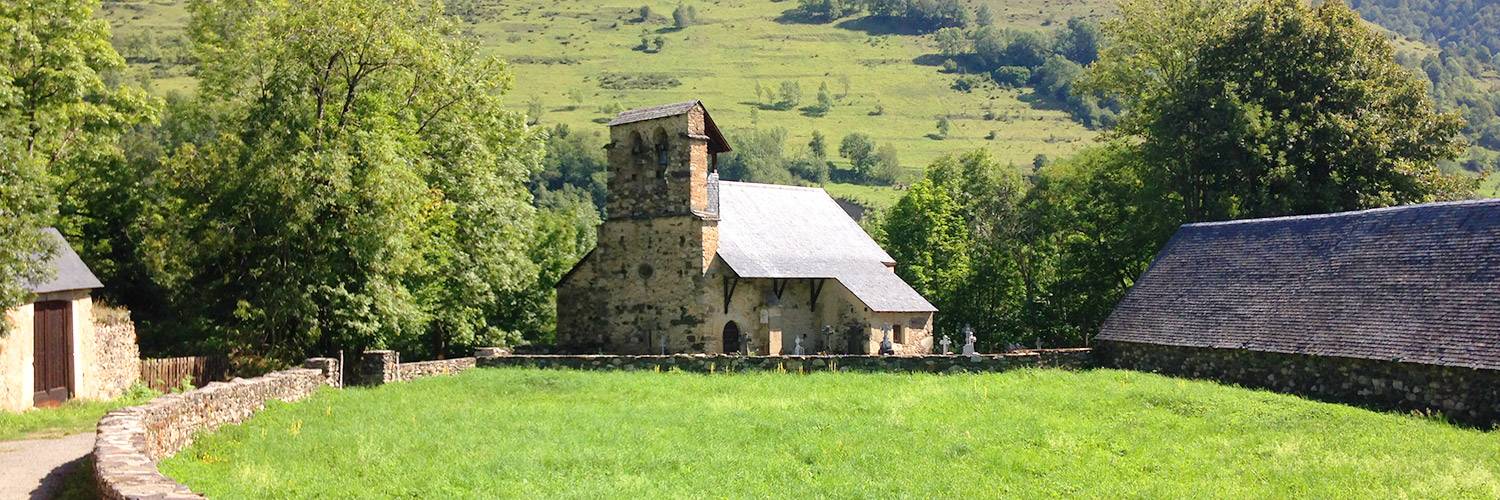
A 14th-century church. The interior décor is protected. The church was listed in 1960.
Romanesque church, altered in the 17th century. The building comprises a nave and a semi-circular apse with a cross vault. Gallo-Roman funerary stones have been reused in the south-western corner chain.
The south elevation is pierced by a portal, the tympanum of which is adorned with a Christ in bas-relief. Inside, the nave is panelled with a polygonal arch vault, the result of 19th-century restoration work that also affected the painted decoration, in order to bring the old wall paintings into line with the new decoration.
These paintings have been preserved without overpainting in the cul-de-four, with the dove of the Spirit in a cloud and two large angel musicians. The side walls of the apse are painted in trompe l'oeil style.
The building was first mentioned in 1289. There are a number of elements that have been replaced: a funerary plaque preserved in the south wall of the building, a cinerary trough (no longer extant) and two triangular pediment stelae preserved in the western edge of the south wall of the church. Analysis of the wall paintings has enabled us to place the building's restoration campaign in the 17th century.
Beyond the cemetery gate is a window lintel decorated with a disc bearing a cross and flanked by two doves.
The rusticity of the sculpture suggests that it dates from the Romanesque period of the building.
Inside, on the choir level, are the oldest and most remarkable paintings in the décor of Saint-Blaise church: the Passion of Christ is depicted in six compartments. The treatment of space, the figures and the draperies with their artificial, angular folds show that the artist was influenced by Flemish painting of the Gothic period.
The paintings in the nave, which are more subdued, are devoted to evocations of the life of Mary and Anne, her mother.
To the left of the entrance door, in the depiction of Mary's birth, Anne is surrounded by midwives, lying in a four-poster bed.
Below, the child is presented to his mother after the birth. On the opposite wall, the Nativity (Mary and Joseph kneel before the Child) and the Adoration of the Magi. The decoration of the nave and part of the choir also includes a series of saints, recognisable by their attributes.
From left to right: Saint James as a pilgrim, Saint Michael casting down a demon, Saint Mary Magdalene holding a bottle of perfume, Saint Catherine in an ermine-edged bodice and skirt, holding a wheel and sword, Saint Barbara with a small tower.
Labels & Categories
- Historical sites and monuments
31110 BENQUE-DESSOUS-ET-DESSUS