Visite
GROTTE DITE DE L’ÉLÉPHANT
- Historical sites and monuments
GOURDAN-POLIGNAN
About
Listed as a Historic Monument.
The so-called Elephant Cave: archaeological site, rock carvings. Listed in 1956 and inscribed in 2014
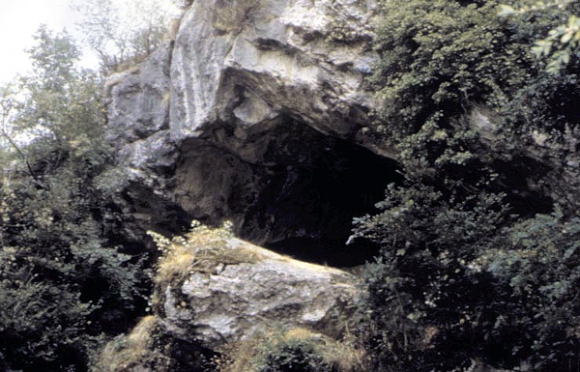
Gourdan cave, also known as Grotte de l'Éléphant or Grotte murée, is located upstream from the confluence of the Neste and Garonne rivers, in the commune of Gourdan-Polignan in the Haute-Garonne. Overlooking the Garonne by 50 m, it opens westwards into the Bouchet hill via a vast porch (6 m high by 10 m wide) cluttered with boulders (fig. 1a). It comprises a vast main hall (Grande Salle) and lower galleries.
The Gourdan cave was discovered by É. Piette in 1870. His workers excavated it between 1871 and 1875, using explosives to blast through the breccia, which was rich in archaeological remains. It was here that he developed his first "excavation strategy" (Delporte 1988: 250-251). In it, he described the following layers: from bottom to top, the Rennes layer, the Horse and Aurochs layer, then the Stag layer, from which he extracted a fine collection that forms the so-called Piette collection, kept at the Musée d'Archéologie nationale – Domaine national de Saint-Germain-en-Laye.
Labels & Categories
- Historical sites and monuments