Visit Aurignac
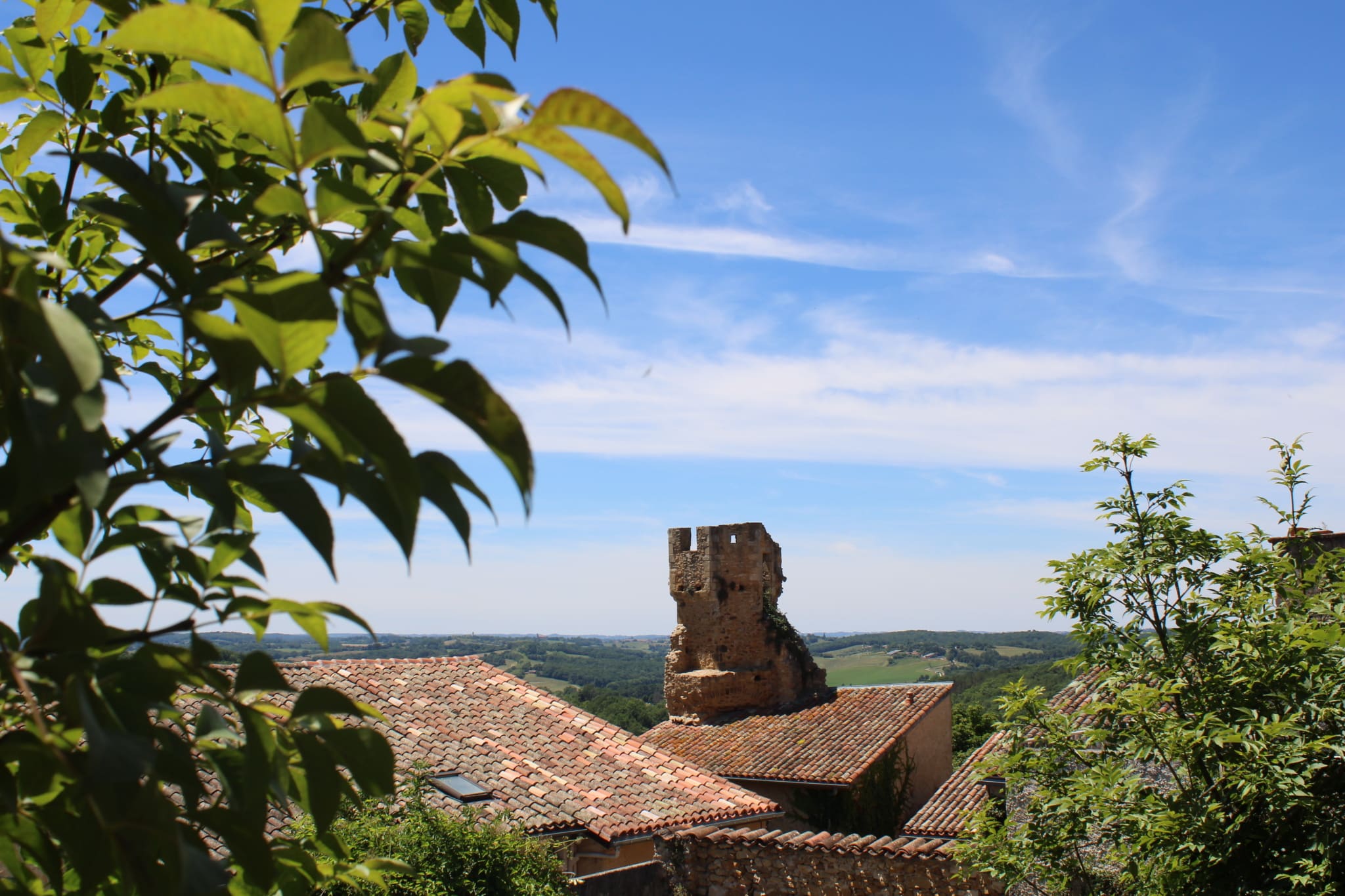
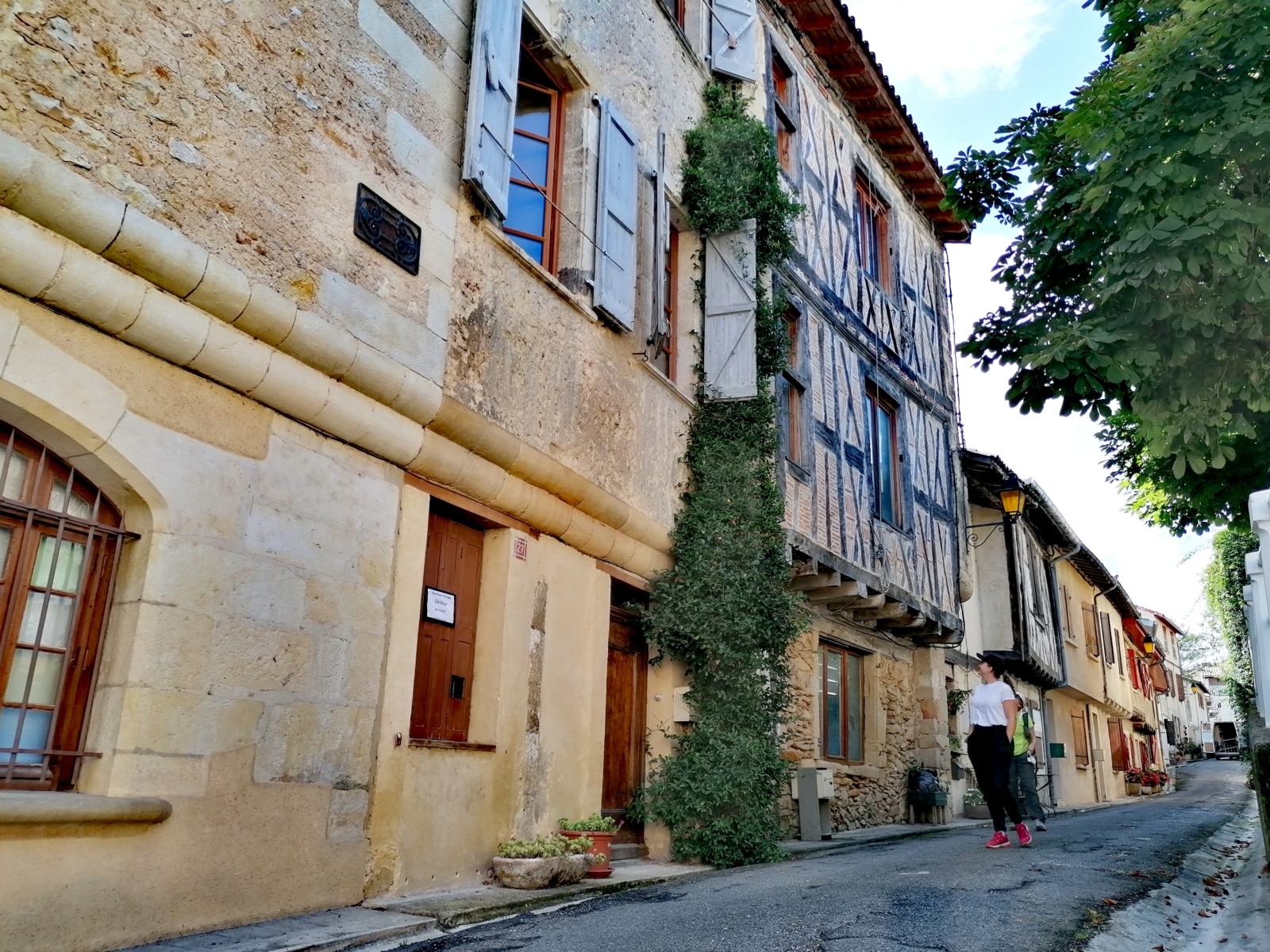
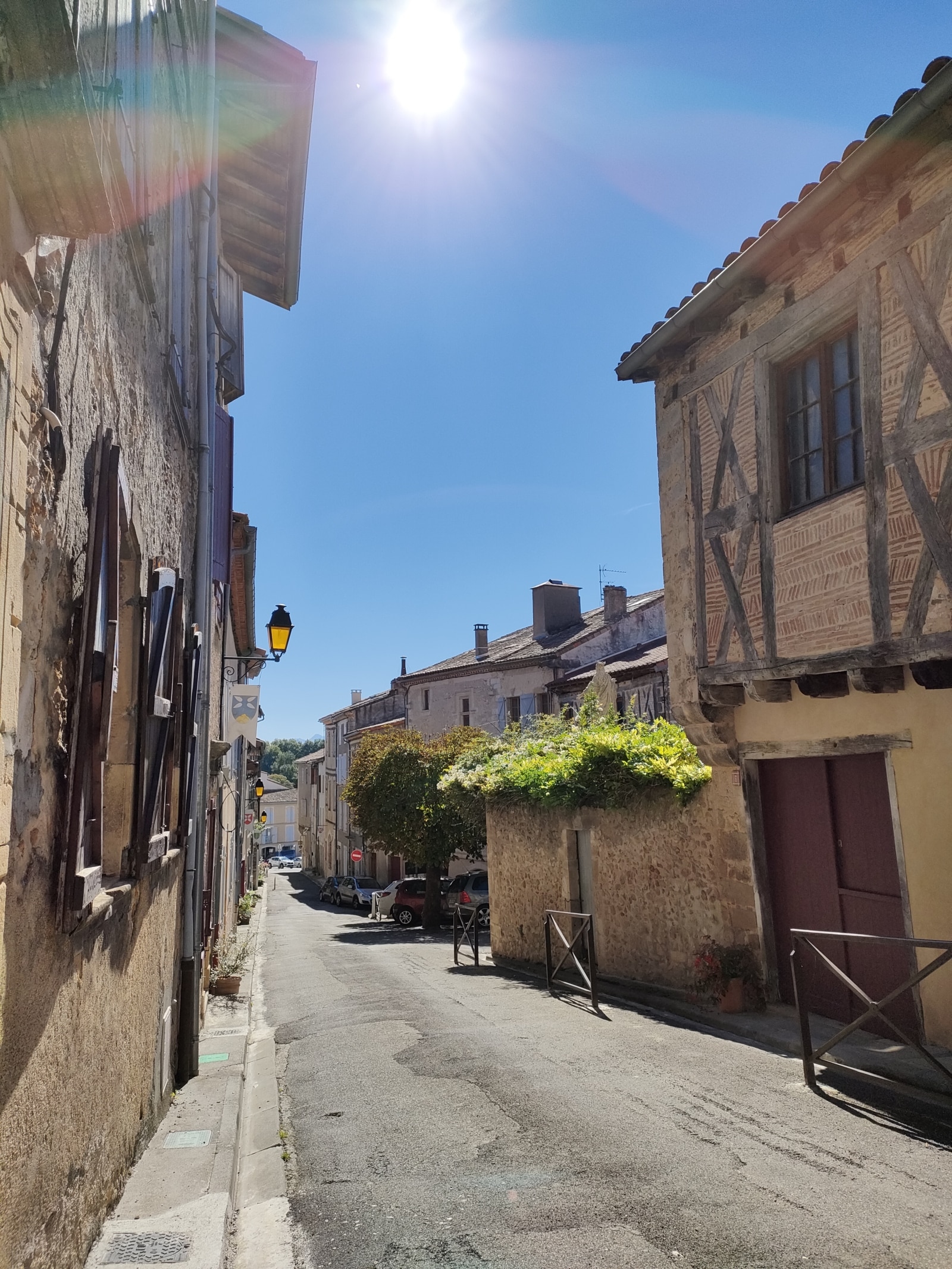
Let yourself be charmed by this medieval town: its count’s castle and keep, the old church, streets with evocative names, towers, half-timbered houses, and private mansions from the late Gothic and early Renaissance periods. An essential stop in Haute-Garonne.
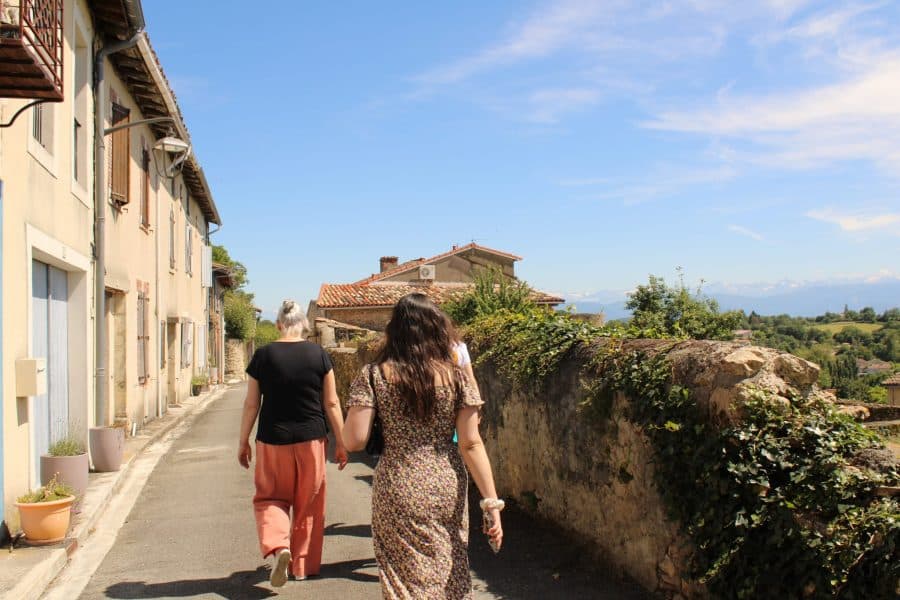
Stroll through old Aurignac
Aurignac is known to scientists worldwide for its rock shelter where tools typical of a prehistoric period were discovered and identified by Edouard Lartet in 1860, giving the period its name and making it an eponymous site.
35,000 years of history!
Perched on its rocky outcrop at an altitude of 404m, the village was also the capital of an important barony of the Counts of Comminges during the Middle Ages. In the 13th century, they built a castle on this naturally defensive site, the first enclosure of a primitive wall. Two new enclosures protected by ramparts bear witness to the village’s economic expansion in the 15th, 16th, and 17th centuries, before it was permanently attached to the French Crown in 1453.
Aurignac was renowned for its cloth and livestock markets, its pottery from the Oulès district, and its tanneries (nearly 40 in 1727!) which produced leather aprons for blacksmiths and farriers.
Saint-Pierre-aux-Liens Church
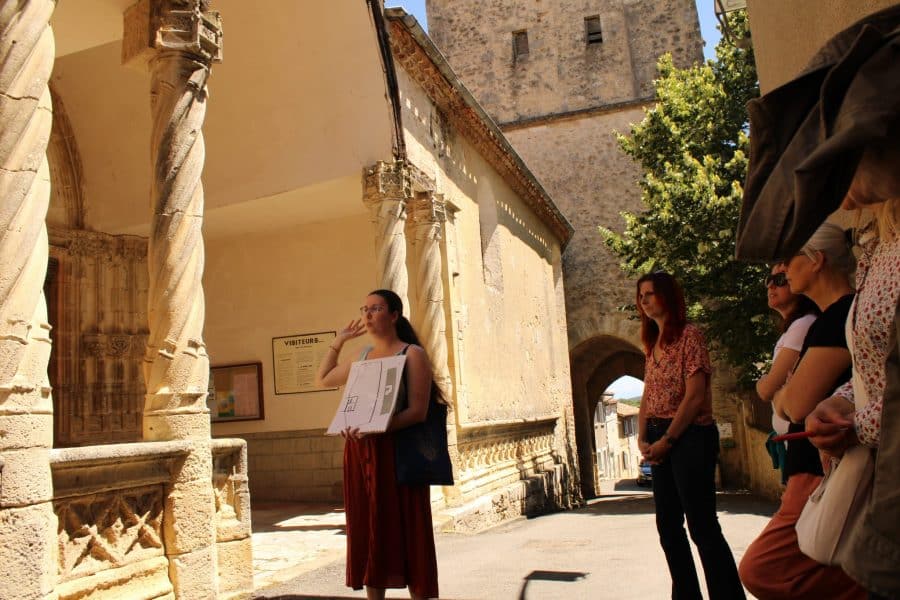
Wedged between two houses to the west and east, and leaning against the 13th-century ramparts of the 1st enclosure to the north and east, the church is part of the defensive system designed by the first lords of Aurignac. Its dominant position protected it from the turmoils of history and demolition, unlike Saint-Michel Church (1550), for which it was deserted for a time.
You enter the church through a porch supported by four twisted columns placed on a solid balustrade decorated with Flamboyant Gothic designs. Its remarkable portal is made from materials salvaged from the “Five Wounds” chapel at Saint-Michel Church. The upper part of the bell tower features a large opening with a discreetly decorated Flamboyant stone frame.
The Count’s Castle
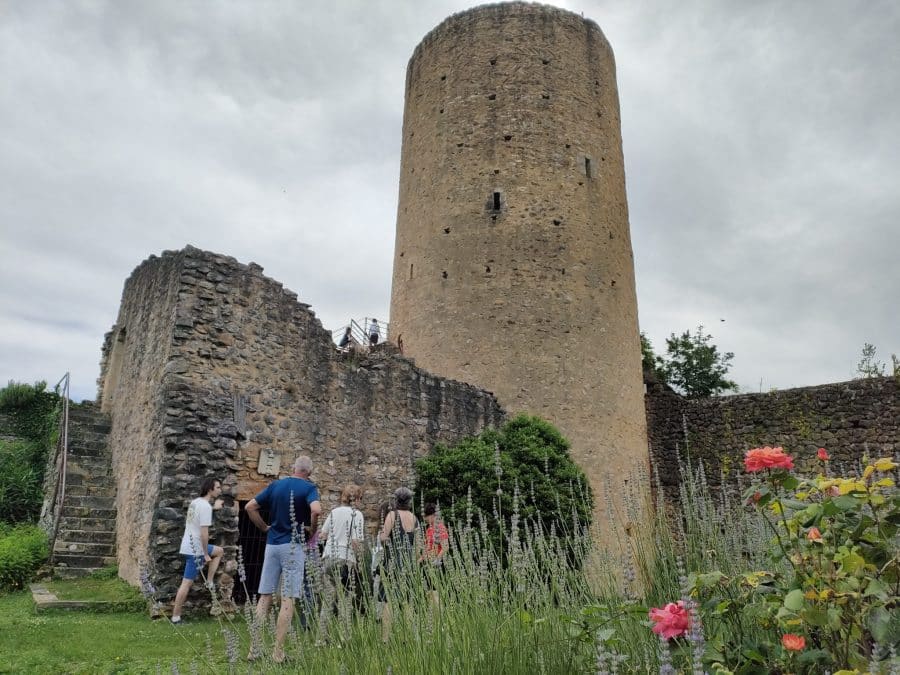
Surrounded by walls 1.5 to 2 meters thick, it takes the form of a rectangular enclosure when the northeastern section—where the count’s residence once stood—is included. The ramparts are reinforced by four solid cylindrical corner towers, which were once crowned with battlements. The keep was an open-top watchtower. It is accessed via a staircase and the original gate. This enormous, slightly truncated conical structure rises 18 meters high, with an outer diameter of 9.25 meters at the base and 8.25 meters at the top. It comprises three rooms stacked one above the other. One ascends via a narrow spiral staircase built into the thickness of the walls, between two concentric towers.
You arrive at the second chamber, which was connected to the one on the ground floor by a square opening forming a keystone, through which one descended via a ladder. This lower chamber likely served as a storage area. We continue the ascent to the third room and then to the top of the keep with its stone slabs, where we can admire the superb panoramic view of the Pyrenees mountain range and orient ourselves using the orientation table. Access is available only in the summer.
The prehistoric shelter
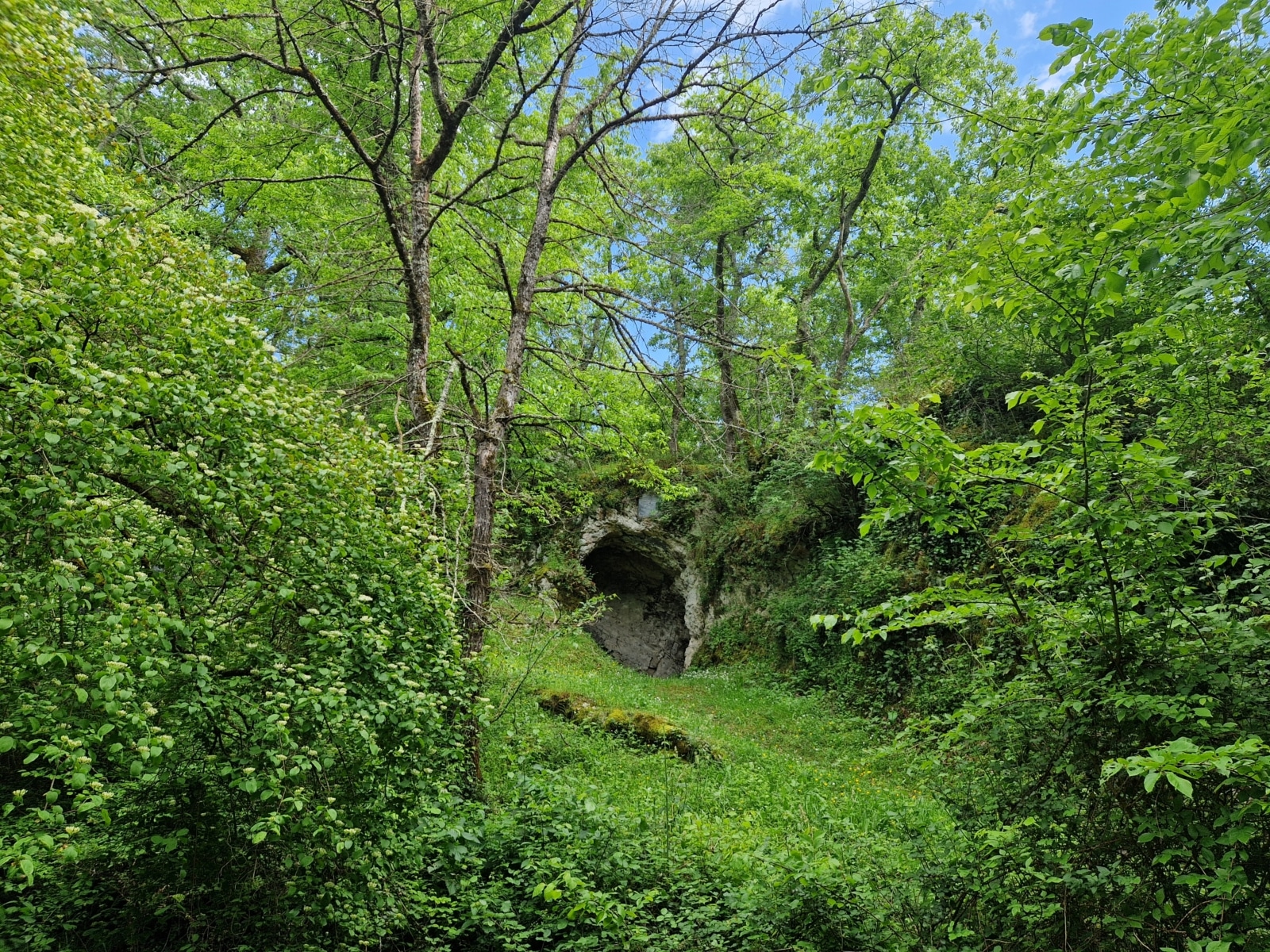
In 1852, Jean-Baptiste Bonnemaison, a quarry worker from Aurignac, accidentally discovered a shelter hidden by rocks covered in vegetation while working on a road. By reaching his arm into a small opening on the hillside, he pulled out a bone and discovered several skeletons and teeth of large mammals behind a vertical slab. The discovery was reported to paleontologist Edouard Lartet, who traveled to Aurignac in 1860 and began excavating the shelter.
By digging, he unearthed a wealth of archaeological material: knapped flints, reindeer antlers worked by man, the remains of a hearth, and bones of now-extinct fauna (cave bear, mammoth, cave hyena, woolly rhinoceros…). This major discovery had a double scientific impact for Lartet. It allowed him to prove the “geological antiquity of man” and contribute to the development of a new emerging discipline: Prehistory.
The Museum of Aurignacian
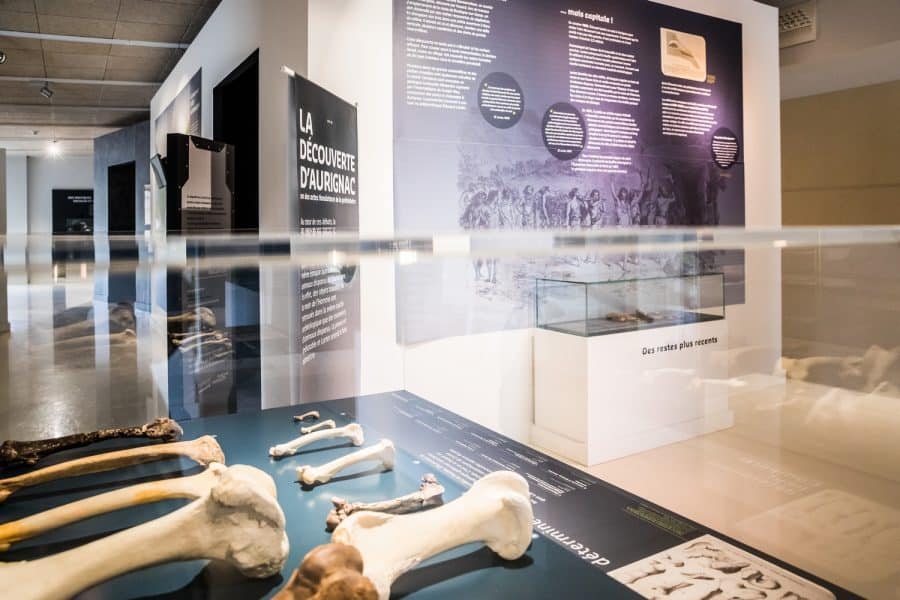
It presents the material and cultural traces left by the first anatomically modern humans (Homo sapiens) who lived in Europe about 36,000 years ago. The exhibits are displayed in a modern museum space, bright and fully accessible. The tour combines original collections, facsimiles of remarkable pieces, maps, timelines, infographics, illustrations, and short experimental archaeology films to better understand the actions of our ancestors.
Practical Information
- Hiking Trails on the App RANDO COMMINGES
- Parking: place de la Mairie with parking disc
- Aurignac is a great spot for trail running; Read the article
Comminges Pyrenees Tourist Office – Aurignac Information Bureau
3 place de la Mairie, 31420 Aurignac
Tel: 05 61 94 77 61
info@destination-commingespyrenees.com
Getting to Aurignac without a car:
LiO Bus 391: Alan >, Aurignac >, Saint-Gaudens
LiO Bus Route 320 – Aurignac >, Saint-Martory >, Boussens SNCF